
December 3rd, 2025
—
Because documents don’t change behaviour. Habits do.
When I was auditing a business last year for their new certification, their documented system was immaculate. Every procedure was well documented, current, and presented like a showcase piece. The leadership team was so proud of it and genuinely looked at it as if this was a representation of how strong the system was.
But when I spoke with the frontline team, they told a different story. They’d had no input into the procedures, and they didn’t recognise the processes written in them. So, they created their own workarounds just to get through the day.
The problem wasn’t the documents. It was the culture. Leadership built a system for people instead of with them. Without consultation and engagement, the system never had a chance to become part of how the organisation actually worked.
A 2022 study in the Australian construction industry found that the dominant organisational culture directly influenced the success of Total Quality Management (TQM) implementation. Organisations with strong, supportive cultures achieved better quality outcomes because people were more engaged, more receptive to quality practices, and more aligned with leadership expectations.
This always reminds me of joining a gym. You sign the contract. You get the welcome email. You download the app. On paper, you are now a gym member. Nothing is missing from the system.
But if you do not actually turn up, lift the weights, adjust your routine, and build the habit into your week, nothing changes. The membership exists, but the results do not.
A quality management system works the same way. The documents show intent. The certification confirms structure. But the outcomes only come when people engage with it every day, shape it to fit how they actually work, and treat it as part of normal business life. Without that daily habit, the system stays theoretical. Just like the gym card sitting in your wallet while nothing really changes.
The Habit Cycle Behind Every Strong System
Quality culture does not start with documents. It starts with habits, built through a simple, repeatable cycle.
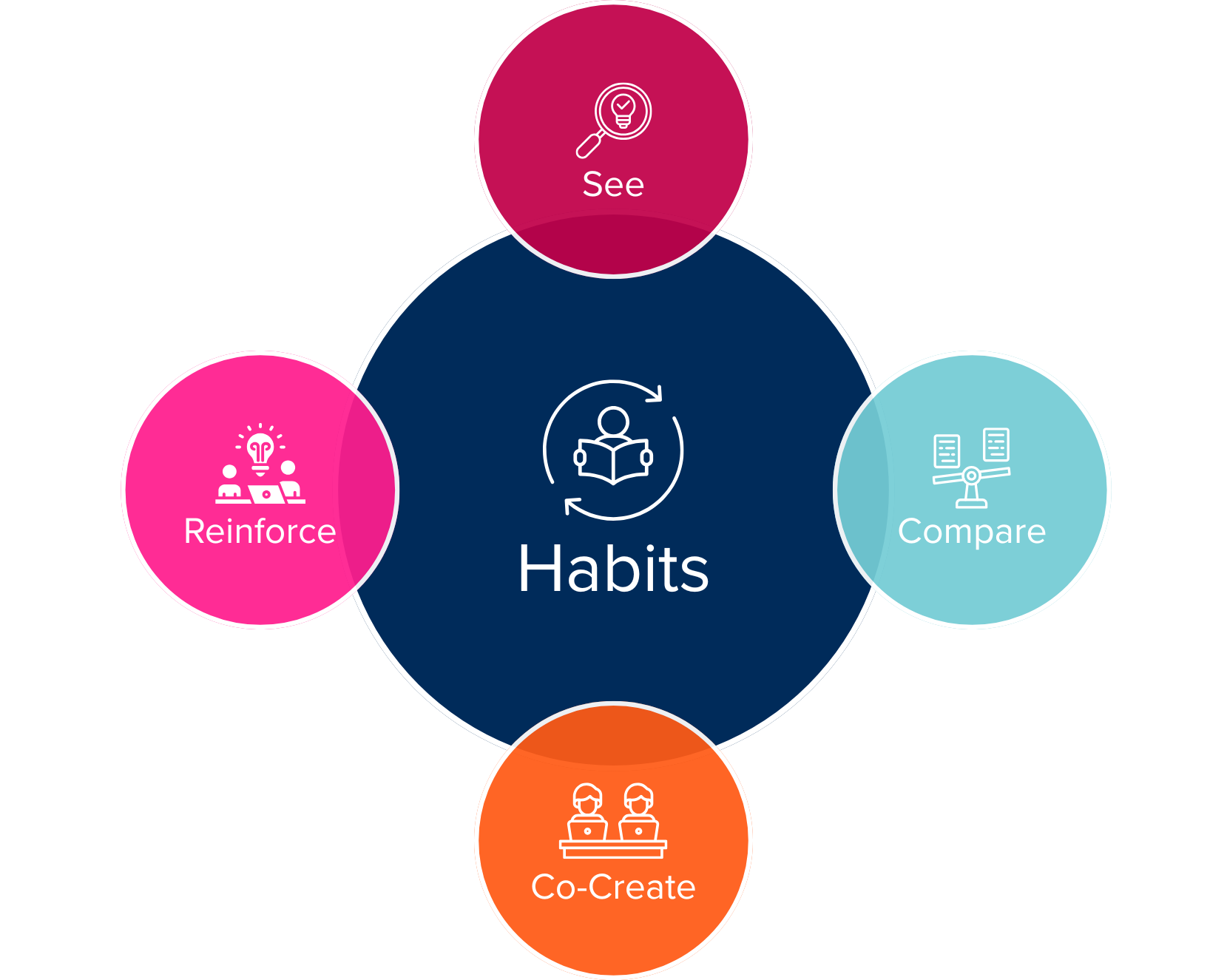
See
This is about understanding real work.
Not assumed work.
Not ideal work.
It means listening to your people, observing how tasks are actually done, and being curious about why they are done that way.
This is where reality enters the system.
Compare
Once real work is visible, it is compared to what is documented.
This is where misalignment appears.
Not as fault.
As insight.
The gap between what is written and what is lived shows exactly where culture and system are out of sync.
Co-Create
This is where ownership is built.
Instead of leaders fixing the gaps alone, the people doing the work help redesign the process.
This is where belief in the system begins.
When people help build it, they are far more likely to use it.
Reinforce
New ways of working only become culture when they are reinforced.
Through leadership behaviour.
Through feedback.
Through recognition.
Through consistency.
What gets reinforced becomes habit.
What becomes habit becomes culture.
Then the cycle repeats.
Each pass through the loop strengthens alignment between behaviour and system.
Over time, the documents stop feeling imposed and start reflecting how work is actually done.
This is how a quality management system moves from being a set of documents to becoming part of daily business life.
Next Steps For You
- Walk one process with your team this week and simply observe how the work actually happens
- Compare that reality to what is documented and note one clear mismatch
- Involve the people doing the work in redesigning that single gap
- Reinforce the new behaviour in your next team interaction or leadership touchpoint
- Repeat the cycle with one more process next month
This is how culture shifts without a full system overhaul.

Most quality professionals know how to manage systems, prepare for audits and keep documentation in order. But if you’re stuck chasing conformance instead of driving real change, this book will help you shift gears from enforcer to leader.



Fabulous article….100% true.