
April 01, 2026
Findings don’t get you invited back. Behaviour does.
I recently shared on LinkedIn about an interesting question I was asked.
“As a consultant, how do you get invited back, especially if you’ve documented a lot of findings in an audit?”
The assumption behind this question is an interesting one – that the number of findings somehow determines whether a client wants to see you again.
In my experience, it has nothing to do with the volume of findings at all. It comes down to how those findings are delivered and, more importantly, how you show up long before the audit even begins.
If findings are presented like a weapon, people will shut down.
If they’re framed as opportunities to strengthen the business, people will embrace the chance to improve.
The findings themselves aren’t the problem.
Your behaviour as the consultant is.
This doesn’t just begin in the audit opening meeting either. It starts from the first interaction you have with your client. Whether you position yourself as someone who is there to catch people out, or someone who is there to help them improve.
Yes, I’ll admit, organisational culture could also play a part, but as an external consultant, your behaviour sets the tone more than you might realise.
You are often the neck that turns the head.
When you lead with collaboration, and a genuine focus on improvement, clients don’t see findings as criticism. They see them as value. And when clients feel supported rather than judged, they don’t just accept the audit outcome. They ask you back. This is consultative leadership in practice, and it’s one of the most overlooked skills in consulting.
As Maister, Green, and Galford raise in The Trusted Advisor, clients engage consultants who act as partners, not judges. The same logic applies to audit consultants: it’s not the volume of findings that determines repeat work, but how you show up from the very first interaction.
What Actually Determines Whether You’re Invited Back
Two consultants can deliver the same findings and get completely different outcomes. The difference isn’t the audit. It’s how they show up.
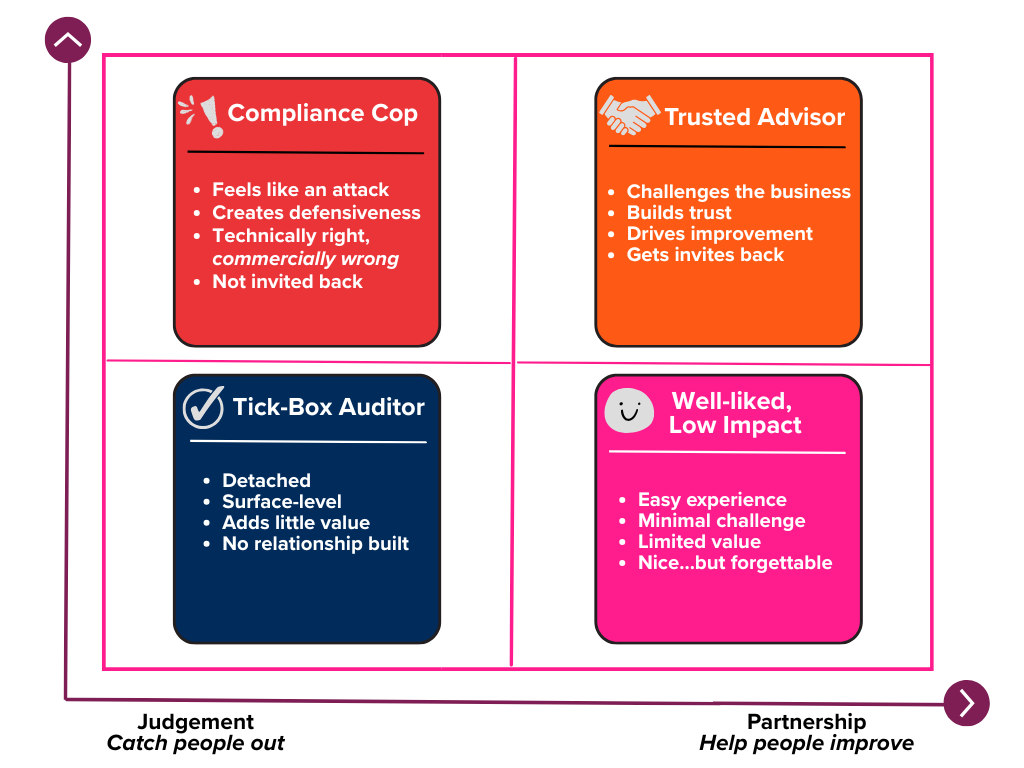
☑️ Tick-Box Auditor
The bottom left is where most people start. Low findings, low connection. There’s no real impact and no real relationship.
⚠️ Compliance Cop
Move into the top left, and the findings increase, but so does resistance. This is where audits feel like an attack, and where relationships break down.
🙂 Well-Liked, Low Impact
The bottom right feels better. You’re collaborative, easy to work with, but without enough challenge, the value is limited.
🤝 Trusted Advisor
The top right is where the shift happens. High findings, delivered through partnership. This is where trust builds, improvement happens, and clients don’t just accept the outcome. They ask you back.
It’s not the number of findings. It’s how people experience you delivering them.
Next Steps for You
- Decide your intent before you walk in
Are you there to catch people out or help them improve?
Make that decision early, because your tone will follow it.
- Reframe your findings before you deliver them
Don’t just state what’s wrong.
Ask yourself, “How does this strengthen the business?”
Then communicate it that way.
- Pay attention to how people respond, not just what you say
Are they shutting down or engaged?
That tells you immediately how your approach is being taken on board… and whether you’ll be invited back.
If you’re serious about building a long-term ISO consulting career, not just chasing the next client, then how you show up matters. That’s exactly what we focus on inside the Successful ISO Consultant program.
Not just marketing, but how to build trust, credibility, and positioning that gets you invited back.



View comments
+ Leave a comment